Consensus Hong Kong 2026: Stablecoins, Privacy and the Future of Institutional Web
Hong Kong’s bright sunshine was a welcome contrast to London’s winter rain as the Ecology Media team headed east for Consensus Hong Kong, one of Asia’s largest Web3 gatherings.
The event drew more than 11,000 attendees to the Hong Kong Convention and Exhibition Centre, with discussions spanning regulation, institutional adoption, privacy, AI and blockchain scalability.
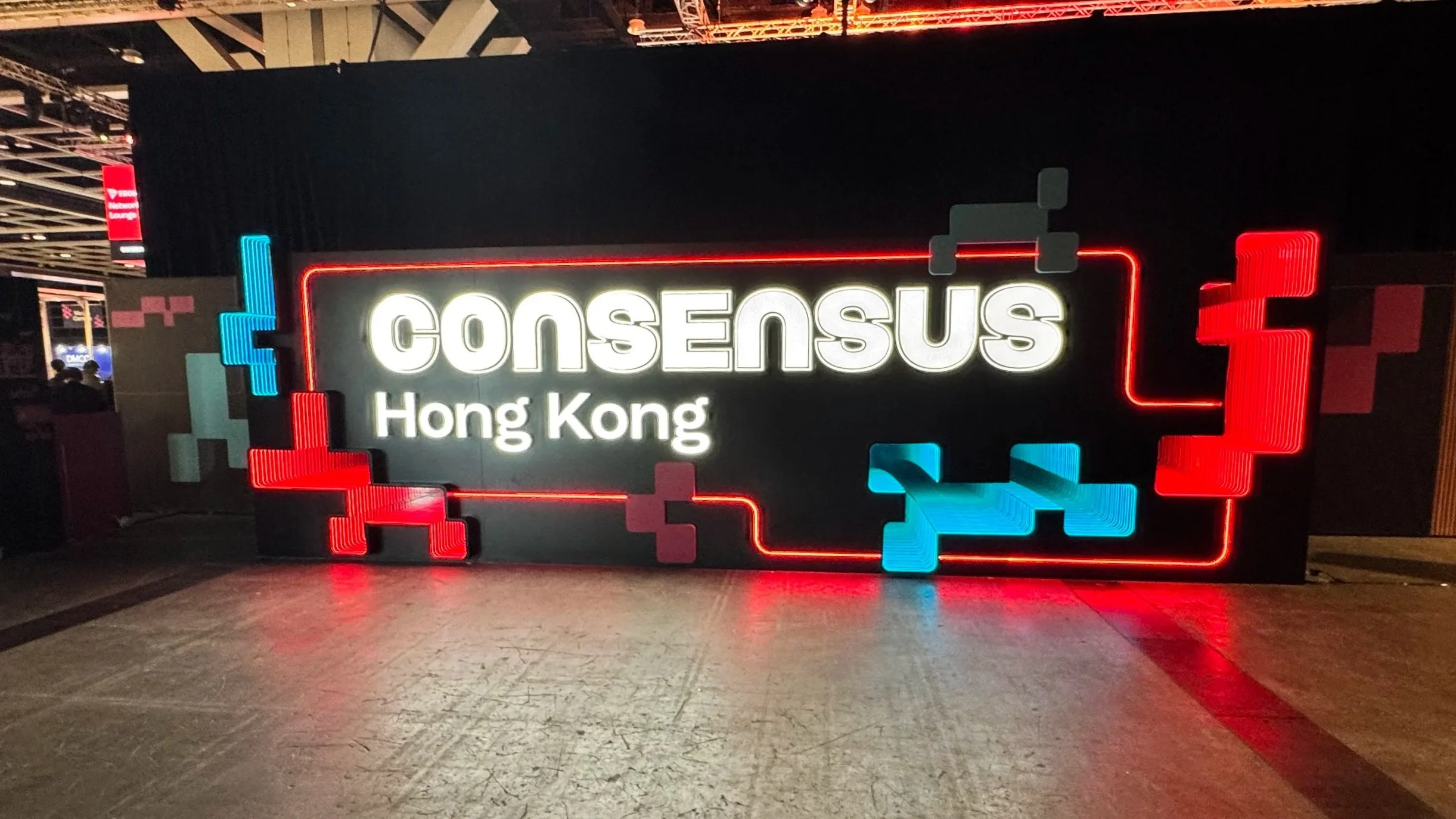
Day One centred on regulation and institutional momentum and Day Two shifted towards developers and infrastructure, reflecting a maturing industry focused on building sustainable foundations that add real value to society.
Across both days, a clear theme emerged: bridging traditional finance and decentralised finance is possible and happening right now alongside a deeper understanding of what it takes to truly unlock the financial, social and personal benefits of Web3 for everyone.
Hong Kong’s Digital Asset Regulation and Stablecoin Ambitions
Hong Kong officials used the opening day to reaffirm the city’s ambition to become a global digital asset hub. Policymakers pledged stablecoin licences as soon as next month and outlined plans for new rules governing perpetual contracts, sending a strong signal to institutional investors.
Financial Secretary Paul M.P. Chan framed crypto as central to the rise of an AI-driven “machine economy,” envisioning a future where AI agents transact on-chain. Meanwhile, market figures including Anthony Scaramucci and Tom Lee encouraged investors to look beyond recent price volatility. Scaramucci reiterated a $150,000 bitcoin target tied to prospective US legislation, while Lee described current market conditions as an opportunity rather than a downturn.
Meanwhile, World Liberty Financial, a crypto project linked to President Donald Trump and his sons, continued to make the headlines, announcing plans for a foreign-exchange platform built on the USD1 stablecoin, targeting cheaper cross-border transfers.
Blockchain’s Privacy as a Foundation for Mass Adoption
Privacy on blockchain was a recurring theme at the show.
One of the most memorable talks to touch on the subject came from Cardano founder and Input Output CEO Charles Hoskinson, who took to the stage for a keynote in a McDonald’s uniform and hat,a tongue-in-cheek nod to the “crypto winter” and the potential need for builders to get “real jobs” during this tough cycle.
Charles argued that the industry is between its third and fourth generations, with retail enthusiasm dampened by cycles of speculation, collapses and meme-driven hype. In his view, the next wave of adoption depends on solving blockchain’s biggest challenge: the absence of practical privacy.
“When you embed rules with privacy and abstraction, individuals, companies and countries can restore their sovereignty,” said Charles.
He positioned Midnight as the solution, an innovation that combines privacy-enhancing technology, smart compliance and user abstraction to allow enterprises and individuals to operate across blockchains without sacrificing regulatory alignment or usability.
To demonstrate the power of the technology, Charles unveiled Midnight City on stage, a live AI-driven video simulation to showcase its selective disclosure and scalable private infrastructure ahead of Midnight’s federated mainnet launch at the end of March.
The keynote concluded with announcements of integrations with LayerZero and USDC, as well as forthcoming partnerships with Google and Telegram.
Data Ownership, AI and Privacy by Design
The theme of privacy continued during the panel “Why Privacy is No Longer Optional.” Moderated by CoinDesk’s Sam Ewen, the discussion explored how privacy has shifted from a personal preference to a foundational infrastructure requirement in the AI era.
Brittany Kaiser, CEO of AlphaTON Capital, argued that the rapid adoption of AI tools has dramatically increased the value and vulnerability of personal and corporate data.
“This is a problem we’ve never faced before, tech companies are starting to say that whatever you created, if it becomes valuable enough, is theirs too.”
Fahmi Syed, President of the Midnight Foundation, framed the evolution brilliantly:
“Web2 was read and write. Web3 was read, write and own. Midnight takes it further: read, write, own and protect.”
He advocated for “rational privacy”, the ability to selectively disclose data while retaining control, while Richard Smith of Google Cloud emphasised privacy by design, user transparency and trust as essential for enterprise adoption.
The panel agreed that privacy must be seamless, intuitive and embedded by default, particularly for AI agents, payments, identity and entrepreneurship.
Institutional DeFi Adoption and Market Maturity
On another closely watched panel, Joe Lubin, co-founder of Ethereum and founder of ConsenSys, argued that decentralised finance has matured significantly.
“Blue-chip DeFi has reached a level of safety and reliability on par with traditional banking systems.”
Joe suggested that institutional comfort with DeFi infrastructure is growing, even as he warned that Bitcoin faces structural challenges compared to Ethereum’s evolving ecosystem.
The broader discussion reflected a shift in tone: from speculative experimentation to infrastructure-grade finance.
The Future of Institutional Trading Infrastructure in Web3
Jacob Zhong of Avenir Group moderated “The Next Generation of Institutional Trading Infrastructure,” which brought together Felix Huang Suojun of Tiger Brokers, Ian Weisberger of CoinRoutes and Myles Harrison of AMINA Bank.
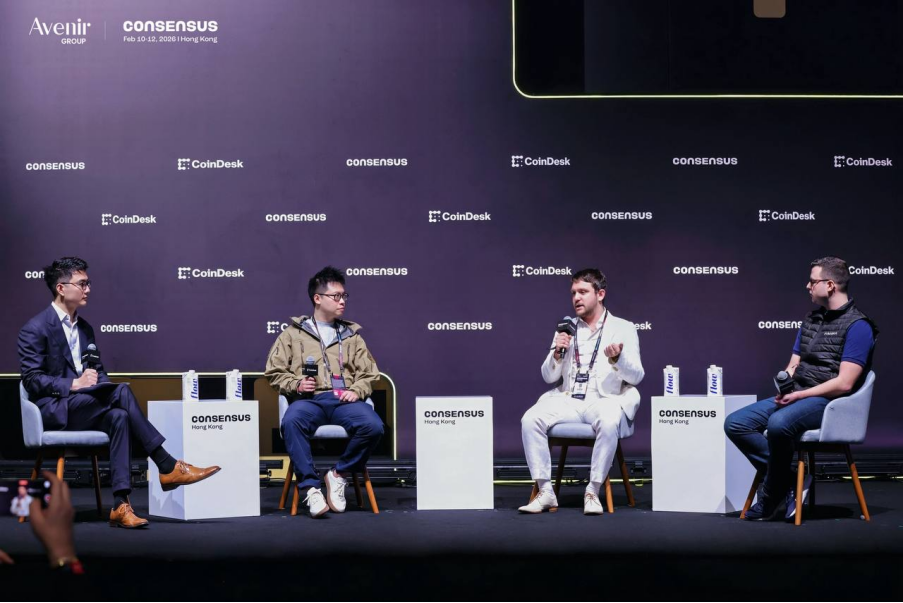
The panel explored the shift towards multi-asset “all-in-one” platforms that allow institutions to trade equities, futures, crypto and tokenised assets from a single pool of capital, increasing efficiency and reducing friction between traditional finance and digital markets.
Panellists agreed that future infrastructure must abstract away complexity, enabling seamless 24/7 trading, secure custody, regulatory clarity and cross-border settlement, while preserving the trust and transparency institutions demand.
Despite ongoing regulatory and operational challenges, clients expect unified access, real-time liquidity and the freedom to move across asset classes without worrying about whether they are trading on-chain or off-chain.
Ian Weisberger, CEO of CoinRoutes, captured this shift perfectly:
“People don’t want to have to move brokers just because one asset class is taking off. They want to trade everything from one account with a single pool of capital.”
Following the panel, CoinRoutes signed an MOU with Avenir Group, signalling a commitment to collaborate on next-generation institutional trading infrastructure and capital-efficient multi-asset workflows.
ZkMe WinsPitchFest: Identity Infrastructure for Mainstream DeFi
The event ended with a high for the host city, when Hong Kong-based zkME Technology took home the $20,000 PitchFest prize after a competitive two-day showcase.
The DePIN-focused company, which already counts 3.5 million users and is currently raising a Series A, positions itself as essential infrastructure for mainstream DeFi adoption, aiming to solve identity and compliance challenges without compromising user privacy.
Runner-up Hubble AI presented an AI-powered platform that enables users to build bespoke trading strategies through natural language prompts, stressing that it provides infrastructure rails rather than trading strategies themselves.
The judging panel featured representatives from Bullish Capital Management, CMT Digital, Fabric Ventures and YZi Labs, underscoring strong institutional interest in scalable, infrastructure-first Web3 solutions.
The Year Ahead: Web3 Infrastructure, Compliance and Scalable Adoption
If there was one defining message from Consensus Hong Kong, it was this: the industry is focused on compliance, privacy, usability and scalable infrastructure - the foundations required to bring institutions, enterprises and eventually billions of users into Web3.
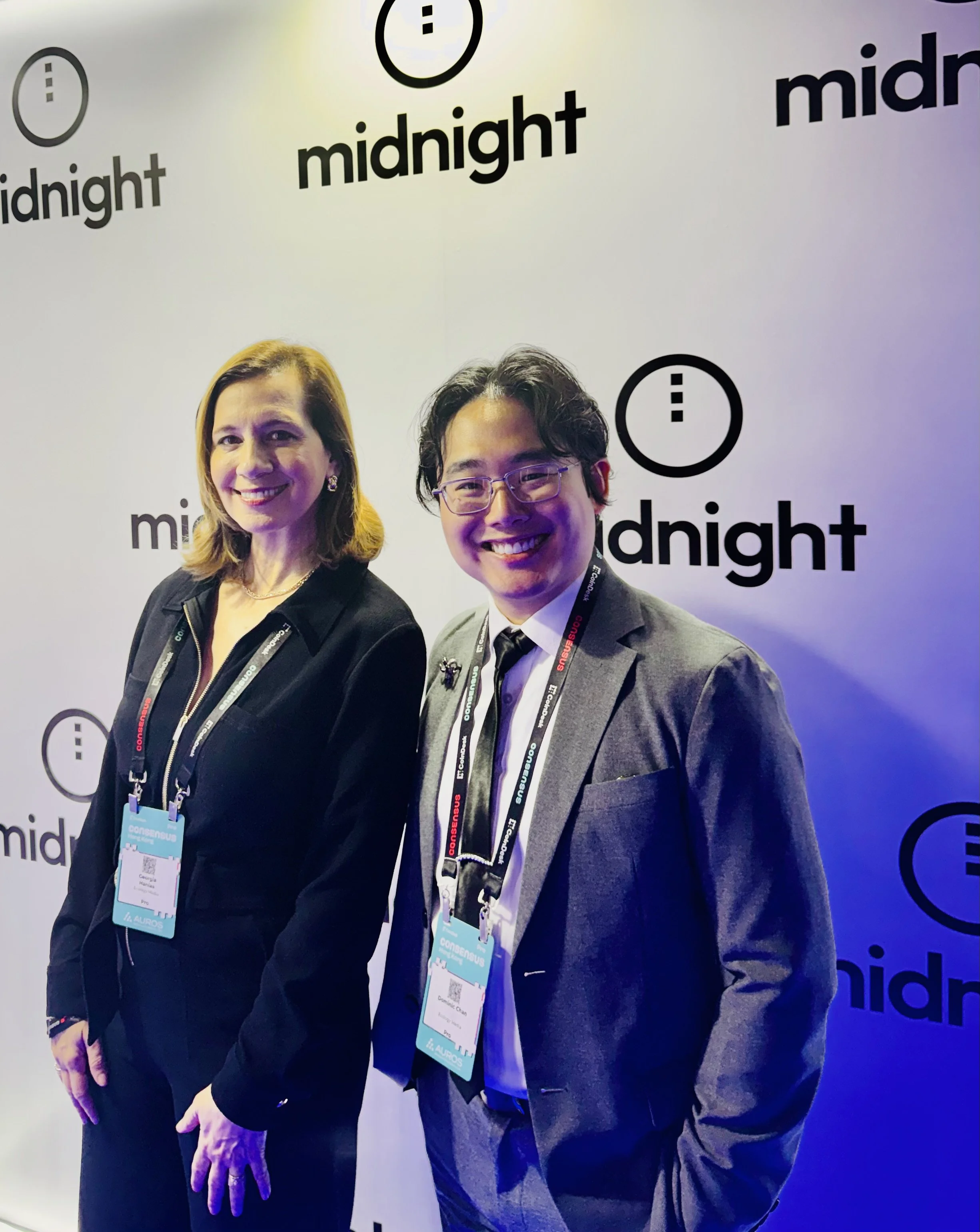
As the event wound down, preparations for the Lunar New Year were just beginning across the city. On 17 February 2026, the Chinese will usher in the Year of the Fire Horse, which is characterised by intense energy, rapid change and a strong drive for freedom and independence.
Let’s hope the year ahead also brings bold action and transformation across the global Web3 sector.
If Hong Kong’s energy this week was any indication, the industry is ready to embrace the challenges ahead, and to build its fourth generation properly.