Davos 2026 Wrap Up: Innovation, Anxiety and a World in Flux
Back in 2016, I had my first taste of Davos while working with Innovate Finance, the UK’s fintech trade body. We weren’t inside the Congress Centre itself. Instead, we gathered at a fringe event devoted to the emerging world of financial innovation hosted by TechCrunch and featuring voices like Arianna Huffington.
Fintech was still finding its feet. Companies that are now household names, Wise, Monzo, Zopa, were only just getting started. The industry didn’t yet have a seat at the top table. We were adjacent to power rather than embedded within it, and doing the best possible job of explaining why financial innovation mattered rather than being assumed as part of the future.
Today, the shift is unmistakable.
With the 56th World Economic Forum in Davos, Switzerland now concluded, fintech, AI and digital infrastructure are no longer fringe conversations. They are central to how political and business leaders think about growth, resilience and power.
We can look back on a week that revealed as much unease as ambition. This year saw a record 400 top political leaders in attendance, including most of the world’s head of state and government. They were joined by nearly 850 of the leading global CEOs and chairs, alongside almost 100 unicorn founders and technology pioneers.
The forum set out to address five key questions:
How can we cooperate in a more contested world?
How can we unlock new sources of growth?
How can we better invest in people?
How can we deploy innovation at scale and responsibly?
How can we build prosperity within planetary boundaries?
AI: From Hype to Hard Questions
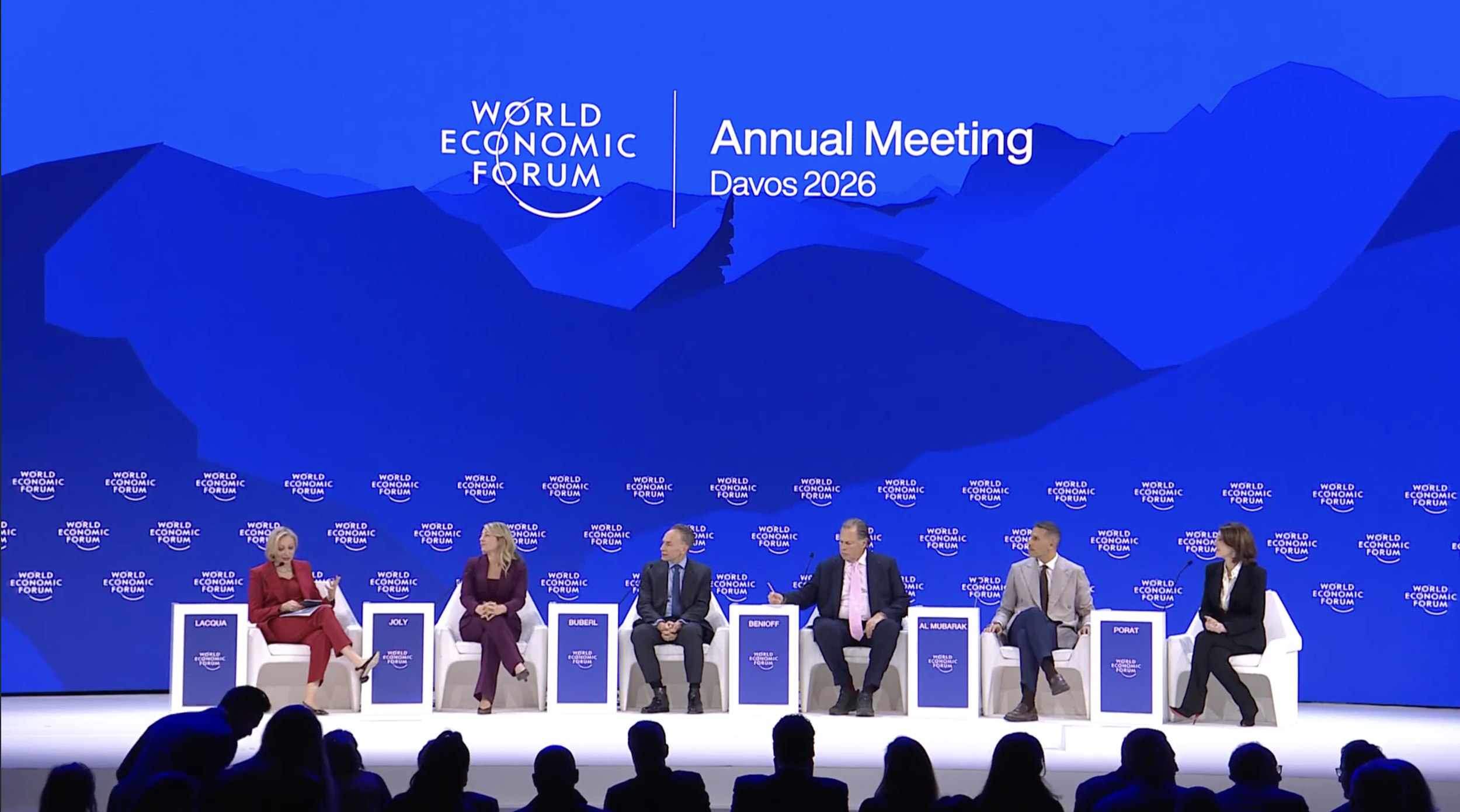
Unsurprisingly, conversations surrounding the future of artificial intelligence played a central role. Yet the dominant question felt antithetical to recent years: will the AI bubble burst?
On the second day of the event, a panel featuring Salesforce Chair and CEO Marc Benioff, AXA CEO Thomas Buberl, Alphabet and Google President and Chief Investment Officer Ruth Porat, Canada’s Minister of Industry Mélanie Joly and Mubadala Investment Company Group CEO Khaldoon Khalifa Al Mubarak addressed AI’s role in driving future growth.
Asked about the prospects for AI in healthcare, Ruth Porat responded that “AI is clearly more than a chatbot and it cannot just be about cost-cutting.”
This sentiment will resonate with anyone who depends on a salary. Yet those with a LinkedIn account will also have seen the wave of Amazon employees seeking new roles following AI-driven automation across the company, a reminder that the idea of deploying AI without cost-cutting can feel, at best, quixotic.
The Shifting AI Narrative
Benioff struck a more candid tone, remarking, “We’re drunk on the growth, it’s awesome,” when referring to AI’s financial and economic benefits to date, while also stressing the need to remain mindful of the technology’s potential downsides.
Perhaps, the concern is not an outright bursting of the bubble, but a levelling out, where hype is no longer the primary driver of optimism.
AI was discussed repeatedly as both an economic opportunity and a risk. JP Morgan CEO Jamie Dimon warned that AI “may go too fast for society” and could even provoke “civil unrest,” the kind of apocalyptic framing that has populated headlines over the past year. This is further impacted by Kristalina Georgieva, head of the International Monetary Fund (IMF) who prophesied that AI would be like “a tsunami hitting the labour market.”
PwC’s global chairman Mohamed Kande highlighted a striking disconnect, noting that more than 50% of companies are “getting nothing” from AI adoption and are failing to capture meaningful value from their investments.
While Davos offered no great revelation about AI’s future, it did make clear that the conversation is shifting. Startups and corporate innovators showcased process-intelligence and AI solutions aimed at making digital ecosystems more open, efficient and impactful.
Debates increasingly emphasised responsible innovation, from ethical frameworks and governance norms to workforce transition, echoing the Forum’s official focus on deploying innovation at scale without destabilising already fragile economies.
Markets on Edge
That fragility was evident in the financial discussions that ran alongside the tech optimism. Beneath the surface confidence, a persistent anxiety pervaded conversations among policymakers and market leaders. IMF and central bank figures stressed that while global growth remains positive, balance sheets are increasingly stretched.
The Trump Factor
As expected, much of the public attention at Davos centred on Donald Trump. Once the 47th U.S. President arrived, following delays to Air Force One, he delivered a speech that initially felt tightly scripted and light on surprises, dominated by boasts about the U.S. economy and claims that America is “leading the world in AI…by a lot.”
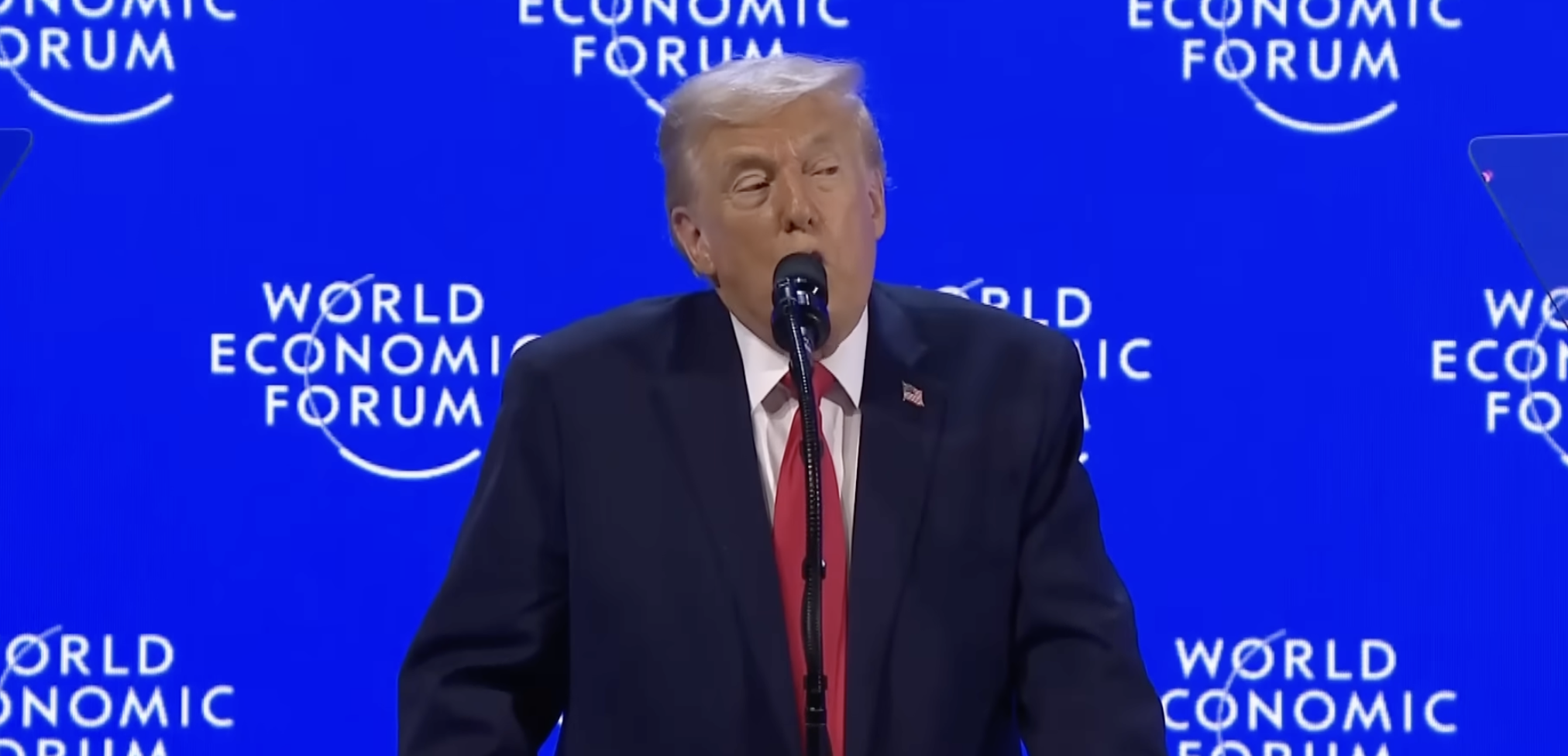
There were familiar flourishes. Repeated uses of the word “brilliant,” renewed assertions that “people will be prosecuted” in relation to the 2020 election and now claims that Venezuela would “make more money under the U.S.” Fooling no one, Trump prefaced his comments with “I wasn’t going to talk about Greenland,” before immediately launching into the subject.
Trump claimed that the US would “not use force” in its pursuit of Greenland, before addressing the rest of the world with the most quotable line of the week: “You can say yes and we will be very appreciative. Or you can say no and we will remember.”
He also reiterated a proposal first floated on Truth Social: a plan to cap U.S. credit-card interest rates at 10% for one year. Trump argued that surging credit-card debt has become a major barrier to saving for a down payment, noting that profit margins for credit-card companies now exceed 50%. The idea was swiftly criticised by Jamie Dimon, who labelled it an “economic disaster.”
Trump further pledged to ensure America remains the “crypto capital of the world,” stating, “Last year I signed the landmark Genius Act into law. Congress is working very hard on crypto market structure and legislation, unlocking new pathways for Americans to reach financial freedom.”
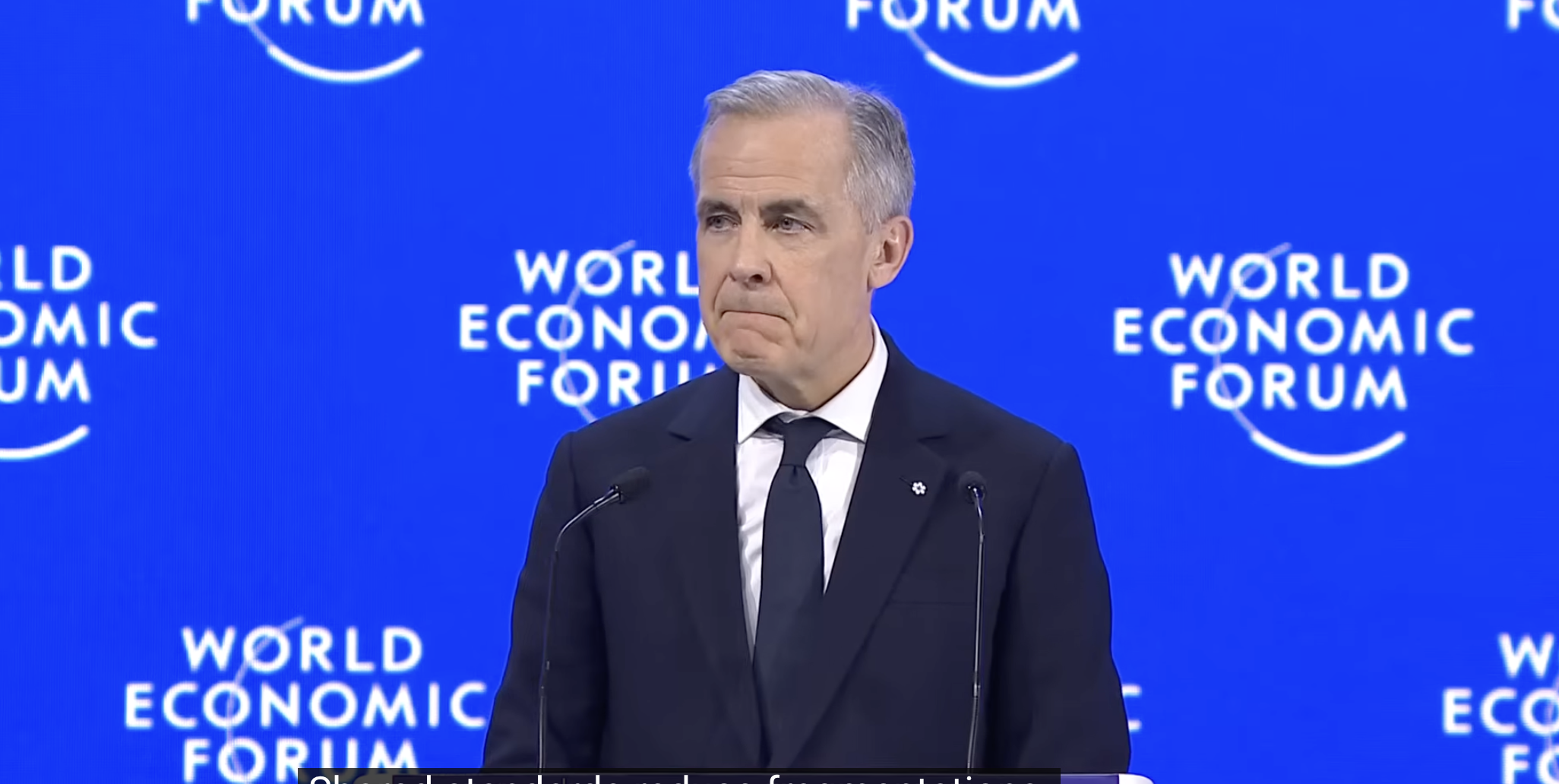
Canadian Prime Minister Mark Carney offered a clear counterpoint, delivering speeches widely interpreted as pushing back against growing U.S. assertiveness. He urged middle powers to protect their interests and uphold international norms, warning that the traditional global order is under strain and that adaptation must not come at the cost of cooperation or the creation of isolated blocs.
Trump rounded out his Davos appearance by hosting a signing ceremony for his newly formed Board of Peace. Leaders and foreign ministers from 19 countries attended and signed the charter. The signing brought the Board of Peace into legal and diplomatic effect, providing a framework for cooperation among the participating states.
Groundhog Day in Davos
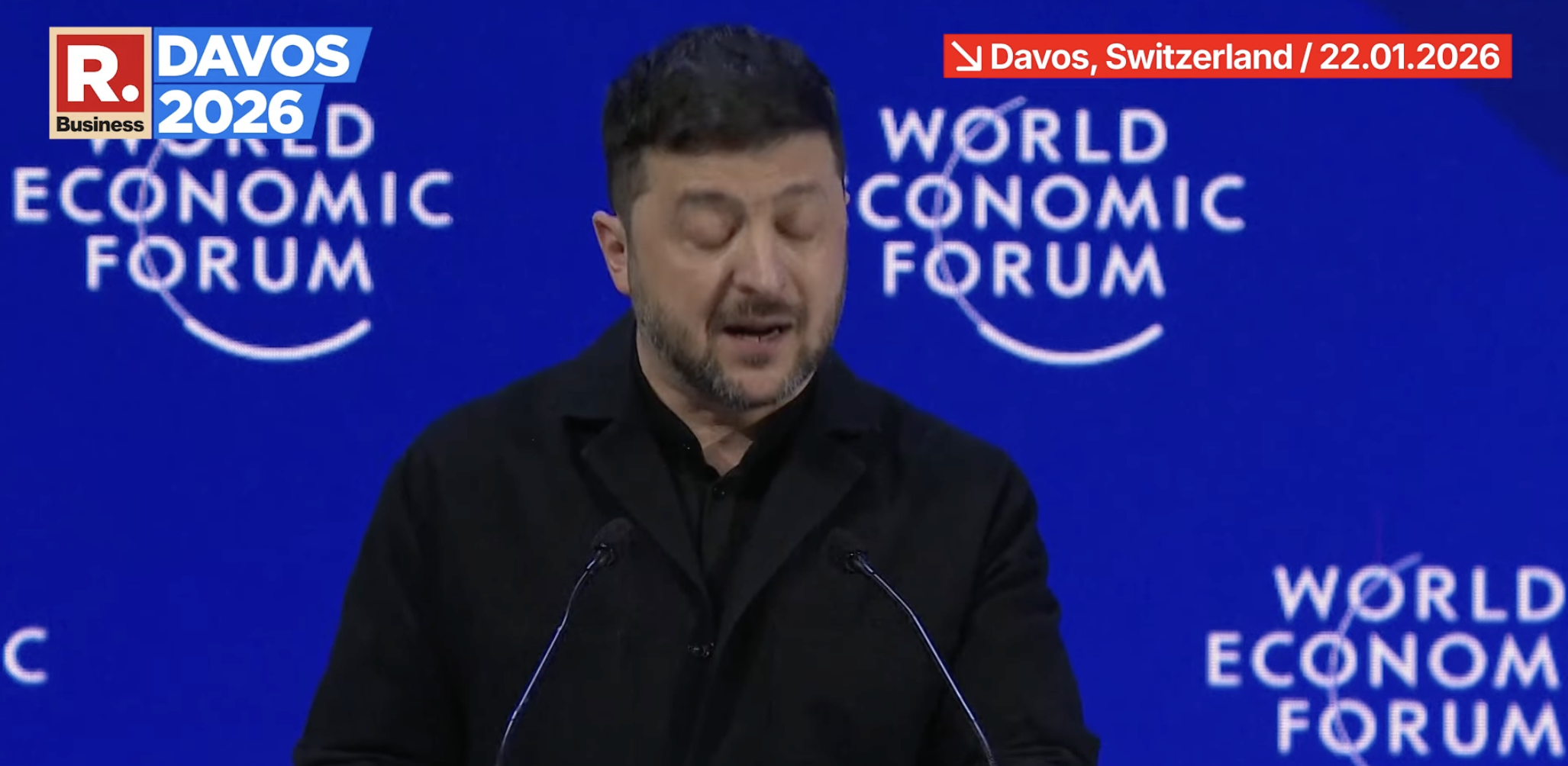
Ukraine remained an unavoidable undercurrent throughout the week. After reports that he would not attend, President Zelensky arrived in Davos and voiced his frustration with Europe in stark terms, likening his return to the forum to the 1993 film Groundhog Day. “A year has passed and nothing has changed,” he said. Zelensky also confirmed that he had discussed post-war security guarantees with Trump during the event.
Climate slips down the agenda.
Climate was firmly on the programme. Panels on decarbonisation were held, corporate net-zero commitments were repeatedly referenced, and familiar language around “transition” and “resilience” remained prominent.
What has changed is where climate sits in the hierarchy of concerns. Compared to previous meetings, it was no longer the dominant moral narrative. Rather than disappearing, climate has increasingly been absorbed into discussions on energy security, industrial competitiveness and geopolitical resilience, a reflection of a world grappling with overlapping crises and constrained choices.
Perhaps the diluted focus on climate reflects more than shifting priorities, it reflects the changing nature of Davos itself. The moments that travelled furthest from the forum this year were not policy breakthroughs, but Trump soundbites and Emmanuel Macron’s sunglasses, a reminder that spectacle increasingly shapes the narrative as much as substance.
…
Davos has always been a mirror of the moment we’re in. This year, it reflected a world both energised by innovation and uneasy about what lies ahead. As someone who’s watched fintech and emerging tech move from the sidelines to the centre, it’s clear that we’re not just talking about the future anymore, we’re living it. The question now is: how do we shape it with intention?