Burnham's Britain: What’s at Stake for Web3, Sustainability, Fintech, and AI
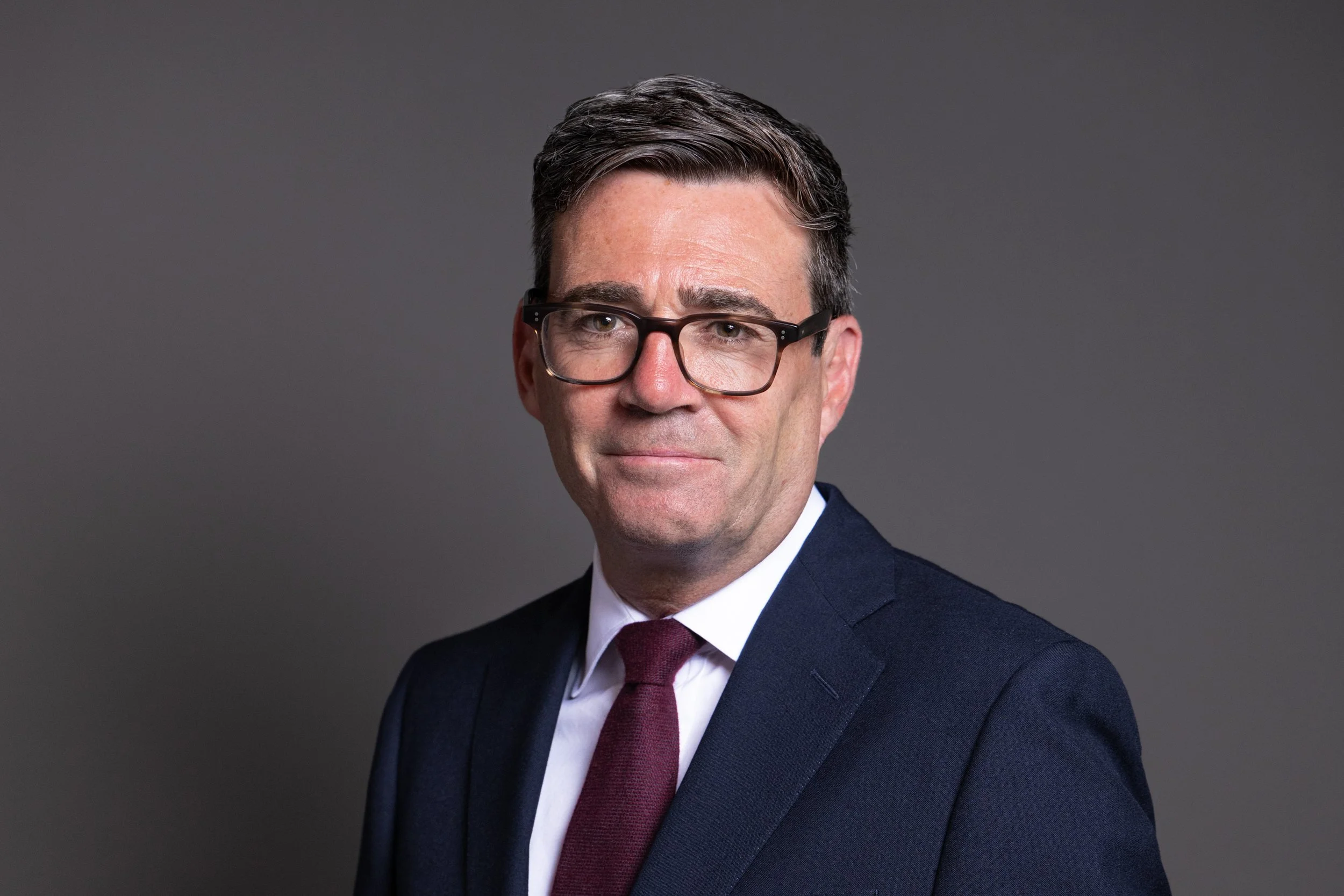
With Andy Burnham stepping into the hotseat at Number 10, the UK has its fifth Prime Minister in four years.
What can we expect?
The new PM has already confirmed new policies to take on cost of living in the short term, and was swift to drop the controversial digital identity plans. Thus far the talk has surrounded £2 bus fare caps, 20% VAT rate cuts for pubs and clubs and cutting tax for household energy bills.
The former Manchester mayor has already had success in building a low-carbon economy, has upgraded payment infrastructure at city scale, and signalled he's not scared of the tech debates that are often avoided in Westminster.
Ecology Media is a key voice across Fintech, Artificial Intelligence, Payments, Sustainability, Web3 and Crypto, so with a new man at the helm, it’s worth a look at how these industries could be impacted by his arrival.
Web3, Blockchain and DeFi
Unlike many senior UK politicians, Burnham has publicly expressed support for Web3 and blockchain innovation, including promoting Manchester as a potential Web3 hub.
A recurring narrative is that the nation has been slow to adopt blockchain, with the ‘too many cooks in the kitchen analogy’ being the ideal summary of the slow process.
Coindesk suggests that “Whilst the UK has dragged its feet, global stablecoin adoption has grown astronomically, with the number of unique holders of non-dollar stablecoins having grown 30x between January 2023 and February 2026.”
Burnham will probably push for clearer, innovation-friendly blockchain and crypto regulation - a move that could attract Web3 investment to the North of England and expand blockchain pilots in public services. The challenge will be balancing this growth agenda with consumer protection and financial stability in the wake of recent market volatility.
For now, the UK's crypto framework is temporarily cooled, but Burnham could be the atropine that restores momentum, overcoming regulatory hesitation and accelerating the nation's Web3 ecosystem.
Sustainability
Consistency is key for long term success in sustainability, something that a fifth PM in four years does not immediately inspire. In June it was reported that the UK was set to water down its target for the number of electronic vehicles sold, this comes after former Prime Minister Rishi Sunak pushed back the initial ban on new petrol vehicles from 2030 to 2035.
However Burnham’s pro-climate stance has remained consistent throughout his political career, despite being relatively quiet on the matter in the lead up to his appointment day, opting to focus more on the cost of living crisis.
He has spoken many times on green matters, with his core position looking at climate action as economic opportunity, not a burden, and being a strong supporter of net-zero.
In fact, Burnham endorsed the Fossil Fuel Treaty in June 2025 and was opposed to fracking and new North Sea drilling. However in June 2026, he reversed Labour's pledge to stop new North Sea drilling. This policy reversal weakens the UK's position as a climate leader on the global stage, particularly as other nations accelerate their transition away from fossil fuels.
A recent Guardian article posed the question How Green is Andy Burnham? The piece notes his strong track record in Manchester, setting a 2038 net-zero target, electrifying bus services and launching home insulation programmes, but also noted concerns.
The economic stakes are significant: the UK's low-carbon economy is now worth £105bn a year and supports more than one million jobs, while this summer's heatwaves alone cost businesses an estimated £2.4bn in lost productivity.
E3G's Ed Matthew stresses the urgency of the task Burnham faces, saying "He needs to confront the reality that no amount of North Sea drilling will bring down energy bills. To do that he must reform the energy market to stop gas setting the price of electricity, and remove all levies on electricity bills for households, business and industry."
Fintech and Payments
UK fintechs, particularly those based in the capital, could stand to gain the most from Burnham’s arrival. Despite the new PM’s Manchester narrative, London is the Fintech hub of Europe and looks to continue to hold its edge with Burnham at the reins.
The critical question is whether the government can maintain regulatory certainty while pursuing broader economic reforms. Industry groups have stressed that stability is essential for maintaining international investment and this is something that is vital in order to maintain the current strong positioning.
This was highlighted by Scott Dawson, CEO of global payments processing firm DECTA UK, who said, "Six Prime Ministers, soon to be seven, in the past 10 years doesn't show the kind of stability that overseas investors need."
One of the clearest potential positive signals is that Lucy Rigby has returned as City Minister, retaining responsibility for financial services and fintech. Rigby held this role from January 2025 to September 2025. Continuity in this role suggests the government wants to avoid disrupting the UK's fintech agenda while broader political changes take place.
Burnham is unlikely to radically alter the UK's payments roadmap, with little around any major reforms so far.
The outlook for payments is quietly positive. This industry is viewed as national infrastructure, open banking already has broad cross-party support and The UK remains a global payments leader. It is expected that he will continue the collaboration with regulators such as the FCA and PSR rather than wholesale policy changes.
The groundwork was laid in February 2026 with the Payments Forward Plan - a three-year roadmap published jointly by HM Treasury, the Bank of England, the FCA and the PSR that sequences everything from stablecoin regulation and open banking reform to PSR abolition and retail infrastructure redesign through to 2028.
Burnham has appointed John Healey as the new Chancellor of the Exchequer, who inherits a regulatory agenda already in motion. HM Treasury published its Modernising Payment Services Regulation consultation on 14 July - six days before Healey took office - covering tokenised payments, open banking and agentic payments, with responses due by 6 October.
The PM already faces a challenge in keeping banks on side, with it being suggested that JP Morgan could abandon its plans for a $3billion headquarters in London if taxes on banks are to increase.
The question is whether the new government will accelerate the pace of payments reform or simply maintain the status quo.
Artificial Intelligence
One of the most contentious decisions of Burnham's early days has been the abolition of the Department for Science, Innovation and Technology (DSIT) - the dedicated tech department created by the Sunak government in 2023.
Its responsibilities have been split, with the majority absorbed into Jonathan Reynolds' newly formed Department for Business, Innovation, Science and Trade. The tech sector responded with alarm, warning that reorganising government machinery risks unsettling global investors and damaging the UK's standing as a technology hub at a critical moment.
The early signals suggest a strategic pivot. According to the Financial Times, Burnham's team is planning a major reset of the UK's AI strategy, shifting toward tech sovereignty, worker protection and increased market regulation over the previous US-centric model. The aim is to limit reliance on foreign Big Tech while prioritising domestic infrastructure and the public interest.
In DSIT’s place, Burnham has elevated AI Minister Kanishka Narayan to a cabinet-level seat, a move Narayan called "a sign of his deep commitment to AI's importance." Narayan, who served as Parliamentary Under-Secretary of State under Starmer with responsibilities spanning AI opportunities, the AI Security Institute and semiconductors, has described AI as "likely the most significant technology in human history" and framed its potential in distinctly Burnham-esque terms: "a reindustrialised Britain, stronger national security, public services transformed for the better."
Critics question whether scrapping DSIT undermines these ambitions, with it referred to as in shambles, and it could unsettle global investors and damage the country’s standing as a technology hub.
James Cobb, CEO of Crowd Connected, said in AI Magazine: "A minister for AI is welcome, but a minister without a department is simply a spokesperson." Dom Hallas, head of the Startup Coalition, told the BBC: "The abolition of DSIT is clearly a bad thing, but if anyone could make up for it in Cabinet it would be Kanishka, who knows start-ups and the ecosystem better than anyone in Government."
Professor Gina Neff of Cambridge's Minderoo Centre added that elevating an AI Minister to cabinet at least signals the PM is "serious about having someone serious in this key role". But the real test will be whether AI delivers visible benefits before job losses take hold.
The Test Ahead
It's early days in Burnham's premiership, but tech industries move fast and wait for no one. The initial signals point to a Prime Minister willing to champion emerging technology - but only on his own terms. Whether that approach delivers the regulatory clarity and investor confidence these sectors require will become evident in the months ahead.