Fintech Leaders Unfiltered: Joel Perlman's Playbook on Building OakNorth
What do I have in common with the co-founder of OakNorth - apart from our support for flexible working for parents with young children, the fintech ecosystem, and London as a great place to grow a business?
We're both terrified of debt.
Joel Perlman talked a lot about staying in the black during a session hosted by Innovate Finance at OakNorth's London HQ, where he was the guest interviewee. As part of their "Fintech Leaders Unfiltered" series, I joined a select few for a first-hand account of Joel's views on how to scale a successful business and reach record-breaking fintech growth. The conversation was expertly led by the wonderful Hayley Barlow - my former colleague at Innovate Finance and now the trade body's esteemed COO.
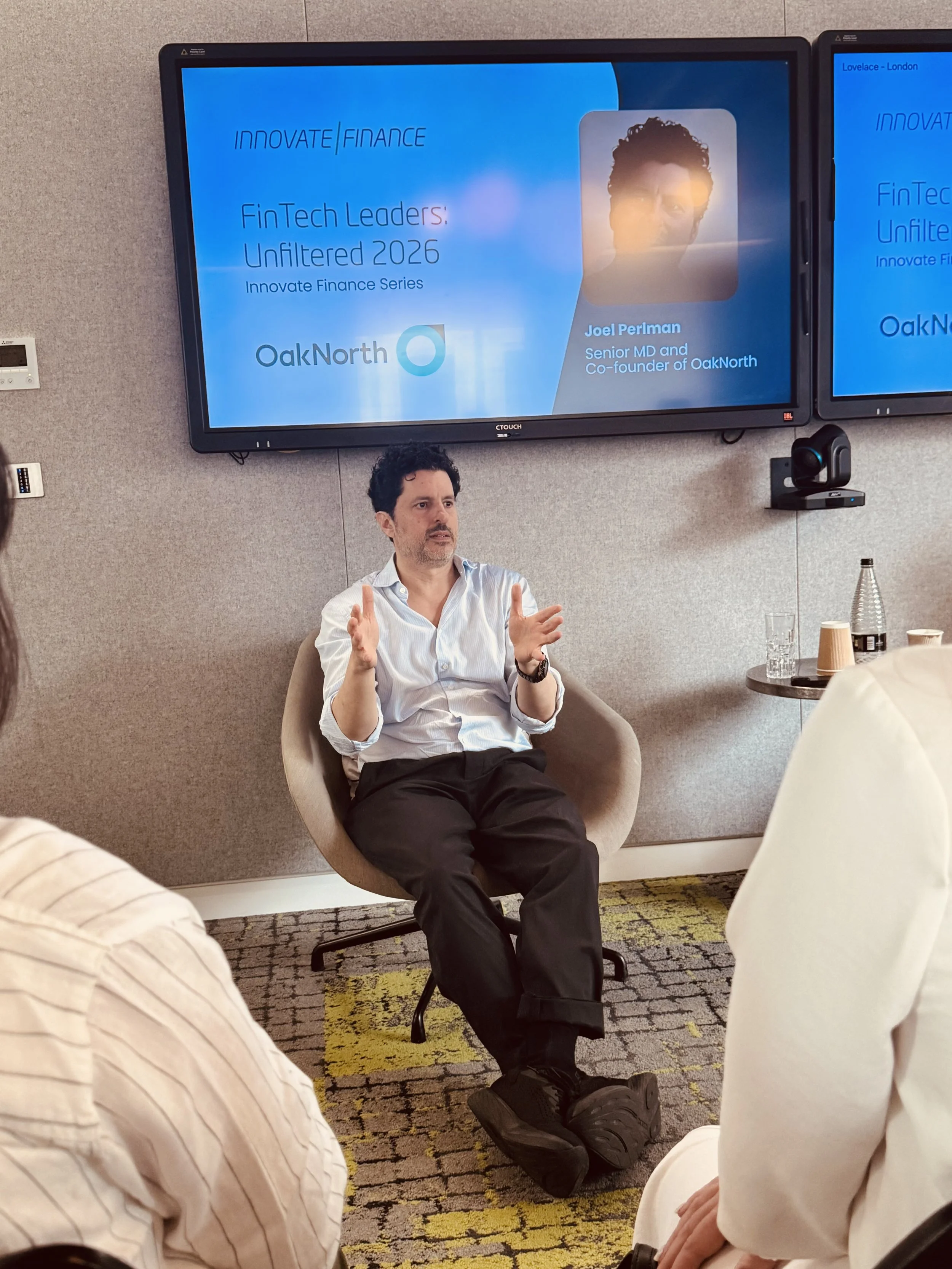
During the session, Joel revealed the importance of staying laser-focused on profitability and sustainability. He spoke about avoiding flashy spending on things that don't matter and resisting the urge to impress others through unnecessary expenditure. As someone who's always been cautious about growing a business steadily, without fanfare, this was music to my ears - and proof that I might be doing something right. If caution helped Joel create one of the UK's most successful digital banks for small-to-medium enterprises (SMEs) and personal savings, I might get a shot at doing something big myself. But until then, I have a lot to learn from a leader who has cultivated a work culture that thrives on ambition, intelligence, and genuine compassion.
Here are the 5 Key Takeaways from the conversation on how to to scale a fintech:
Good Money vs Bad Money
One of Joel's most striking insights was his distinction between "good money" and "bad money." Good money, he explained, comes from revenues and profits - the lifeblood of any sustainable business. Bad money, on the other hand, comes from equity raises and capital rounds that leave you beholden to investors breathing down your neck. "There's nothing to celebrate about raising money," he said bluntly. "In fact, it's a moment of sadness because now you're beholden."
This perspective challenges the venture capital-fuelled startup culture that dominates headlines. Joel warned against getting swept up in the terminology of "burn rates," "Series A," and "unicorns" - language he sees as imposed by VCs to control the narrative. "Whenever I hear an entrepreneur saying Series A, Series B, Series C, I want to run," he admitted. "They're lost."
The A-Player Philosophy
When it comes to building a team, Joel is ruthlessly selective. He defines an A-player as someone who is extremely hard-working, culturally aligned, and exceptionally smart - not just cognitively, but emotionally and in their ability to communicate. The crucial difference? An A-player can identify the difference between an A and a B performer, while B-players cannot make that distinction.
"Your first 10 people should only be A-players because they're going to hire the rest of the company," Joel explained. At OakNorth, the first 10 hires are nearly all still there, having built the rest of the organization. His unconventional hiring approach in the early days? Interviews only on weekends - a simple test to identify people willing to go the extra mile for a startup.
The Office Matters
Joel is unapologetically pro-office, arguing that working from home has created a productivity crisis, especially for young people. "They're sitting there waiting for the next Zoom call, and they're not going to learn anything," he said. "They become like tools."
But there's one exception to his five-days-in-the-office rule: mothers or fathers with small children who need flexibility for school runs and childcare between 3pm and 7pm. It's a policy that resonated deeply with me. While I never had the good fortune to enjoy this privilege during my working life when my children were young, I'm glad to see leaders like Joel championing it now. I hope one day my grown-up children will have the opportunity to work for someone like Joel - or maybe even launch a bank themselves.
London: The Fintech Capital
Joel remains bullish on London as the hub for fintech innovation. What makes London unique, he explained, is the proximity of three critical elements: the regulator, the capital, and the talent - all within a few tube stops. "The regulator is very open to innovation here. We have a really good regulator and a good framework," he said. While other cities like San Francisco and Dubai are growing, Joel believes London will always be Europe's undisputed fintech hub.
What's Next
For OakNorth, the goal is ambitious yet straightforward: grow from £1 billion to £20 billion in lending over the next five years, with a heavy focus on the US market. No need to reinvent anything - just scale what's already working while maintaining their remarkably low loss ratio of 4 basis points.
For Joel personally? After 12 years building OakNorth, he's looking to start from scratch again - this time in social impact areas like air pollution, water pollution, or democratizing medicine. At 52, he wants to get back to the thrill of building something new.
As I left OakNorth's offices that day, I felt energised and validated. Joel's playbook - prioritising profitability, hiring only the best, staying deliberate about your path, and building genuine moats is a real blueprint for sustainable success. And his commitment to supporting working parents gives me hope that the next generation won't have to choose between ambition and family the way so many of us did, including my former self.