From Shoreditch to Westminster: Inside Fintech Week London 2026
Fintech Week London returned to the capital from 7-11 September 2026, bringing together founders, investors, operators and regulators for five days of events, panels and conversations. Iconic nightclub fabric ditched heavy bass and dancing for insightful conversations as the venue became the hub for a two-day summit, with the week bookended by side events, networking breakfasts and an evening at the House of Commons. The themes were broad: AI, regulation, trust, digital assets, infrastructure - but the recurring thread was clear: the technology moving fastest is only as good as the foundations underneath it.
Kicking off the week: the Fintech Coffee breakfast
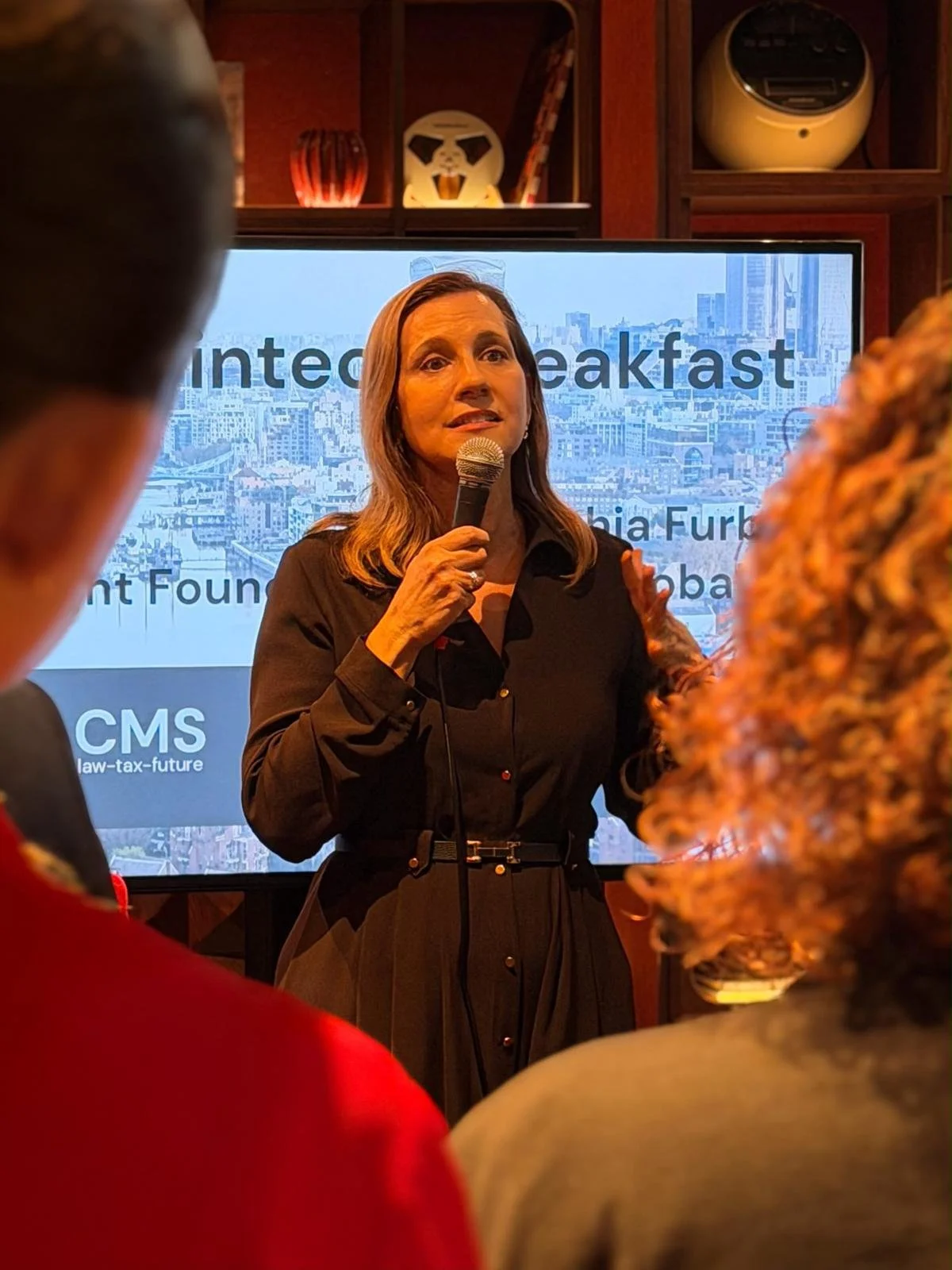
The week began on Tuesday morning with the London Fintech Breakfast, co-hosted by Ecology Media alongside This Week in Fintech and Midnight Foundation. Despite the rain, the room was packed and bustling with excitement and great conversations. Hosted by our founder Georgia Hanias in the heart of Shoreditch - the corner of London where much of the UK's fintech story began - the session featured a fireside Q&A with Fahmi Sayed, President of Midnight Foundation, moderated by Sophia Furber of S&P Global, exploring what continues to make London a compelling place to build a fintech business.
The discussion highlighted London's geographical advantage, sitting between Asian and US time zones, alongside the strength of the city's legal framework, tech infrastructure and talent pipeline. Fahmi, a proud South Londoner who has worked in Tokyo, Hong Kong, New York and Miami, was unequivocal: "London is the centre of most things, financial or commercial. Geographically, we're in the best location. You can cover Asia, you can cover the US East Coast and beyond. Most contracts are written in UK law."
But he was equally direct about the risks. "We are a society that likes the underdog, and yet when the underdog wins, we try to knock them off their pedestal," he said. "Taxation, business rates - entrepreneurs and businesses tend to suffer. If there are any people from the government here, I would encourage you to speak to the people in this room. Don't penalise people who are successful, who are bringing growth to London. Encourage it. Otherwise you'll see a brain drain across the US, into Europe, or into the Middle East."
The atmosphere in the room proved that there is nowhere in the world more exciting for fintech than London.
The summit: AI foundations, data architecture and the human element
Day 1 of the summit opened with a keynote from Rt Hon. Kanishka Narayan MP, Minister of State for Artificial Intelligence, who spoke without notes for twenty minutes on the future of British AI and fintech. He outlined government commitments including a £100 million Sovereign AI fund and a £500 million venture capital fund aimed at helping AI-led businesses scale, while also touching on the prospect of regulatory sandboxes specifically for AI-driven payments.
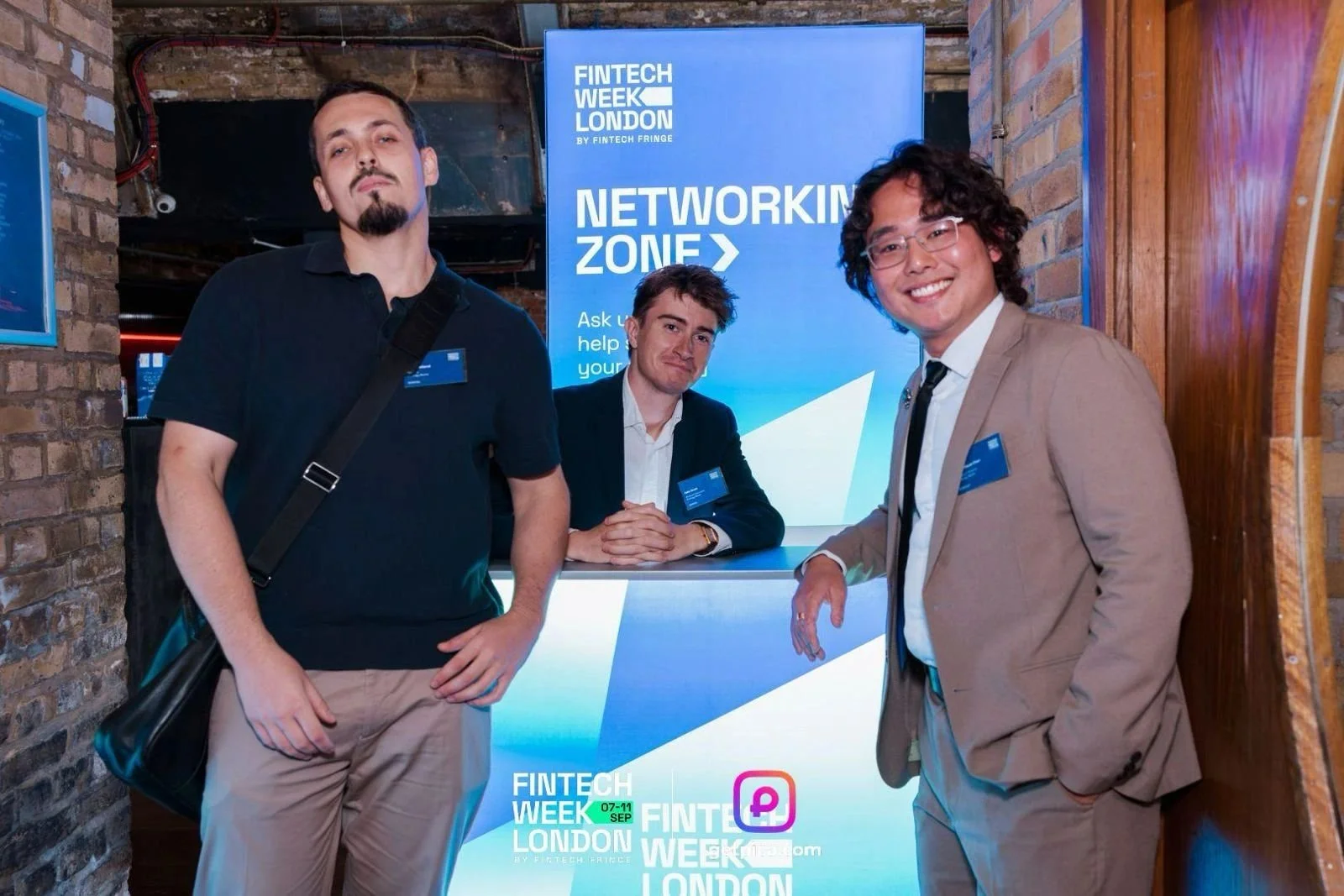
The Ecology Media team were on the ground as the programme split across two stages. The AI in Action track posed practical questions about when copilots genuinely become autonomous agents, how to measure AI ROI, and the governance required before handing real workflows to non-human systems. A panel on measuring AI ROI, featuring speakers from Wise, Santander and Bitsul, made the point that time saved alone is a poor metric if the underlying problem remains unresolved.
The Regulation Reimagined track featured the FCA discussing live AI testing in the sandbox, while panels on cross-border compliance tackled the practicalities of scaling across jurisdictions. The Convergence track explored the closing gap between traditional finance and crypto, with Ecology Media CEO Georgia Hanias moderating a fireside on "The End of the TradFi/Crypto Divide" featuring Fahmi Sayed and Mintoo Bhandari of Monument Bank. The afternoon sessions covered stablecoins, tokenisation of real-world assets and the emerging question of AI agents that need their own wallets to transact.
Day 2 shifted focus to growth and infrastructure. Coinbase UK CEO Keith Grose opened with a keynote arguing that London's financial infrastructure needs to catch up with the internet era, pointing to 24/7 markets, tokenisation and stablecoins as forces reshaping the landscape.
One of the standout sessions was "Data as a Moat," part of the Architecting track. Moderated by Kristina Mydlar, the panel featured Mark Dearman, VP Banking at FintechOS, and Sheila Mitham, Co-CEO of Evara. The central argument was that when everyone has access to the same AI models, competitive advantage comes from the data underneath and the architecture holding it together.
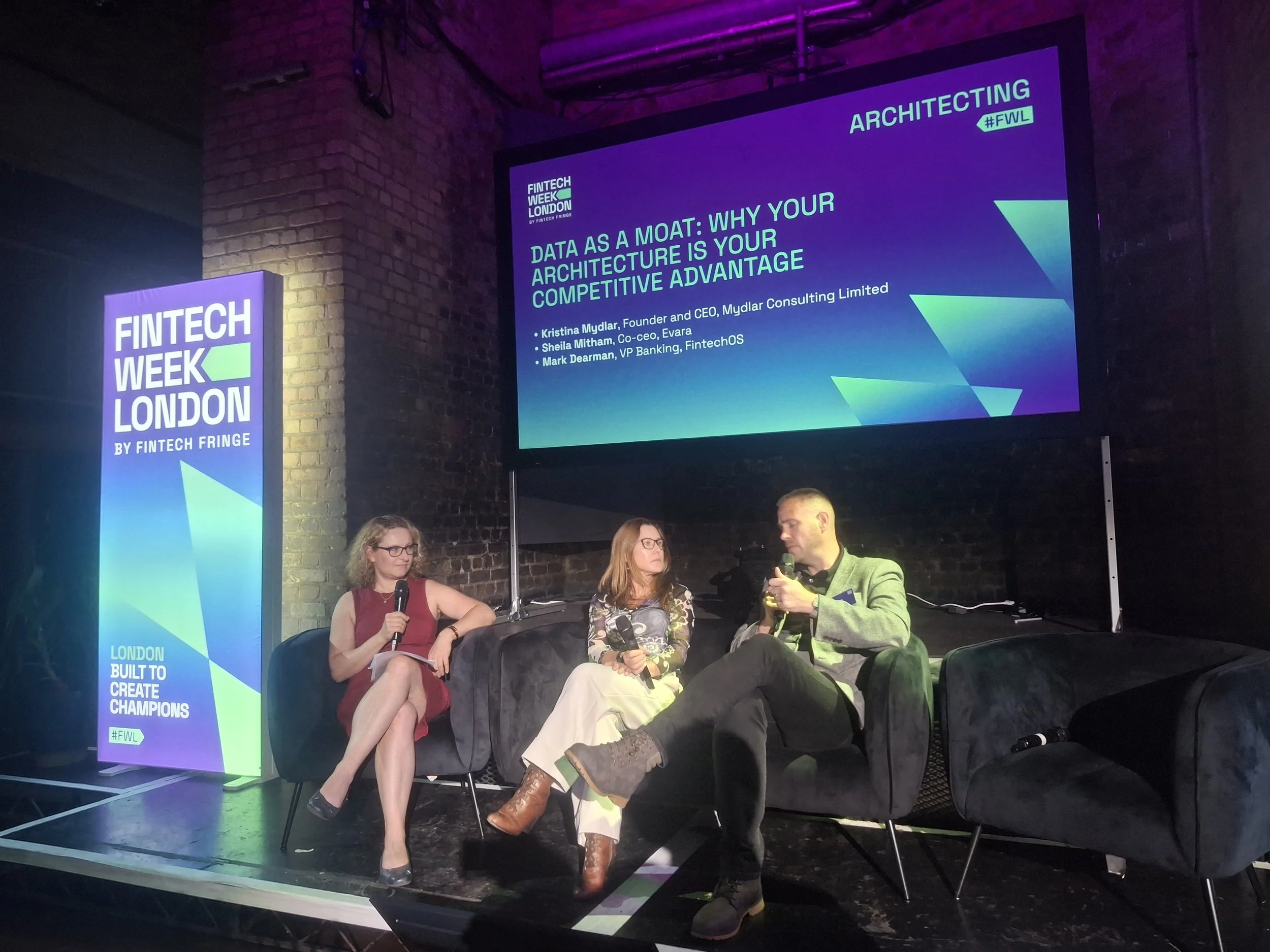
Dearman was forward about the state of data in financial services: banks have been swimming in data for years, but a single data point like a customer name can have ten or more different labels across systems, making it nearly impossible to arrive at a single source of truth. His advice was to invest in what he called "the boring foundations" before layering AI on top. "Without proper foundations, you're just powering rubbish data and digging yourself deeper," he said.
The London Fintech Showcase in the afternoon put emerging companies on stage in two rapid-pitch sessions: The AI Vanguard, spotlighting AI-native founders, and Beyond AI, featuring companies using artificial intelligence as a growth lever across embedded finance, wealthtech and payments.
Fintech meets Westminster: the House of Commons events
Away from fabric, the week also included events at the House of Commons. Mastercard hosted a Tech Showcase that featured opening remarks from Simon Forbes, Mastercard UK&I President, alongside Samantha Niblett MP and Economic Secretary Lucy Rigby KC MP, each emphasising the importance of partnerships between industry and government to keep the UK at the forefront of fintech. The showcase featured demonstrations from companies including Currensea, Tunic Pay and Money Carer, as well as Mastercard's own fraud and cyber intelligence capabilities.
Separately, the APPG on Digital Markets and Digital Money held an evidence session titled "Crypto Asset Exchanges: Do They Have a Level Playing Field?" The discussion brought together Lord Kulveer Ranger of Northwood, Felix Haynes of Coinbase, Peter Loo of Bybit and Mayuri Pandya of Bitpanda to examine whether the UK regulatory environment allows digital asset businesses to compete on fair terms. Lord Kulveer Ranger put it starkly: "When an industry-leading firm tells us it is not coming to the UK because we could not give it the certainty it needed, that is not a signal we can afford to ignore. There has been real progress over the last eighteen months, but we have to keep up that pace and keep engaging with the industry to be attractive and competitive on a global stage." He was referring to a major crypto exchange that had pulled out of the UK, citing regulatory uncertainty - a pointed reminder that the window for getting policy right is not open indefinitely.
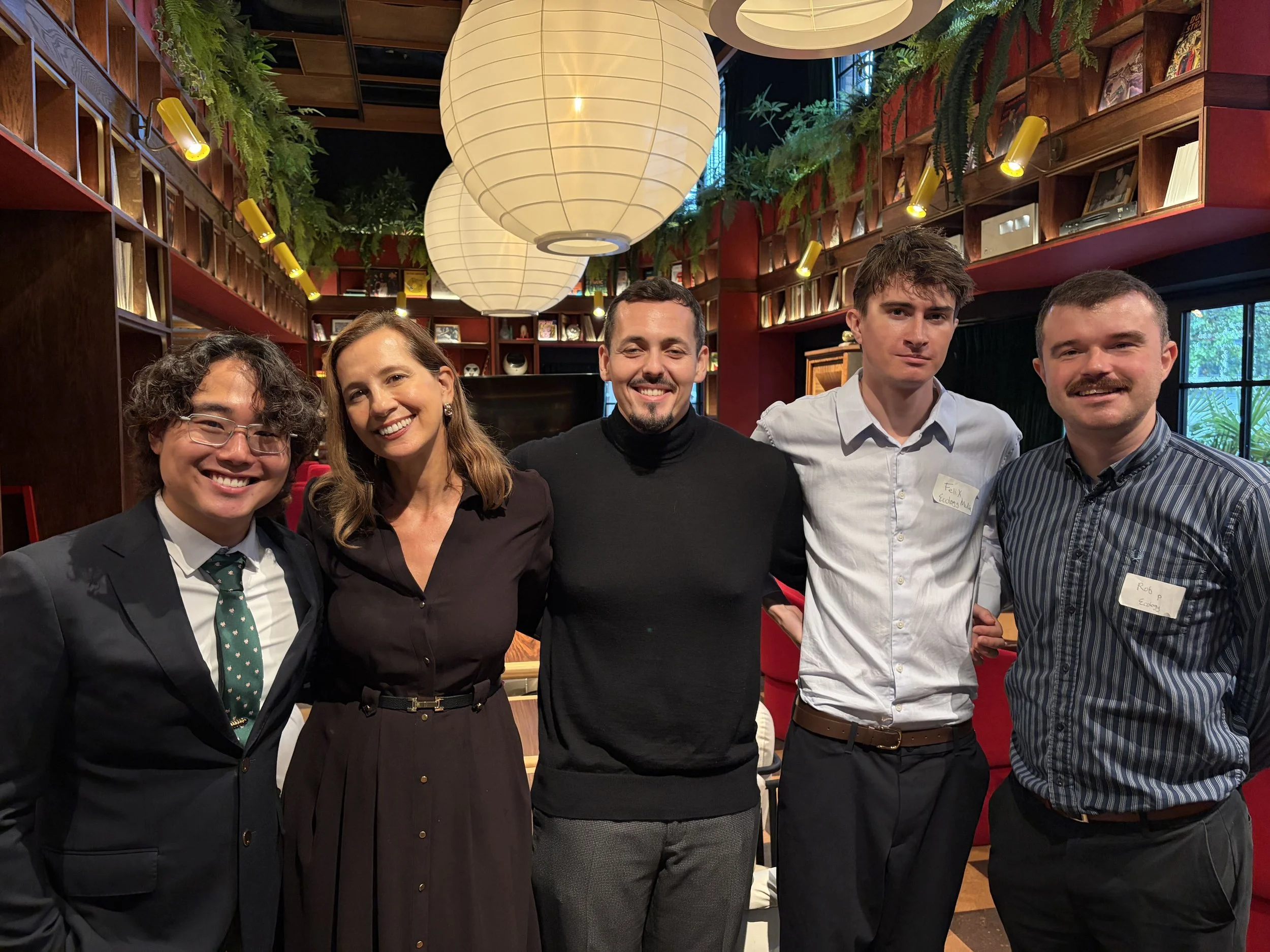
The Ecology Media Team at the Breakfast event
Looking ahead
The Ecology Media team left the week with a clear sense that London's fintech community isn't slowing down, but it is growing up. The founders we spoke to are less interested in disruption for its own sake and more focused on solving real problems at scale. Capital is returning, though investors are more selective, favouring sustainable growth and clear paths to profitability. London's position as a global fintech hub remains strong, with international companies continuing to choose the city as a base for raising capital, accessing talent and scaling.
But beneath the optimism, the practical challenges discussed throughout the week remain: messy data, cultural resistance to change, regulatory frameworks still catching up with AI, and the perennial question of who owns the foundations. The conversations are moving in the right direction. Now the hard part: making sure the work underneath keeps pace.